§ 01
The signs to check for
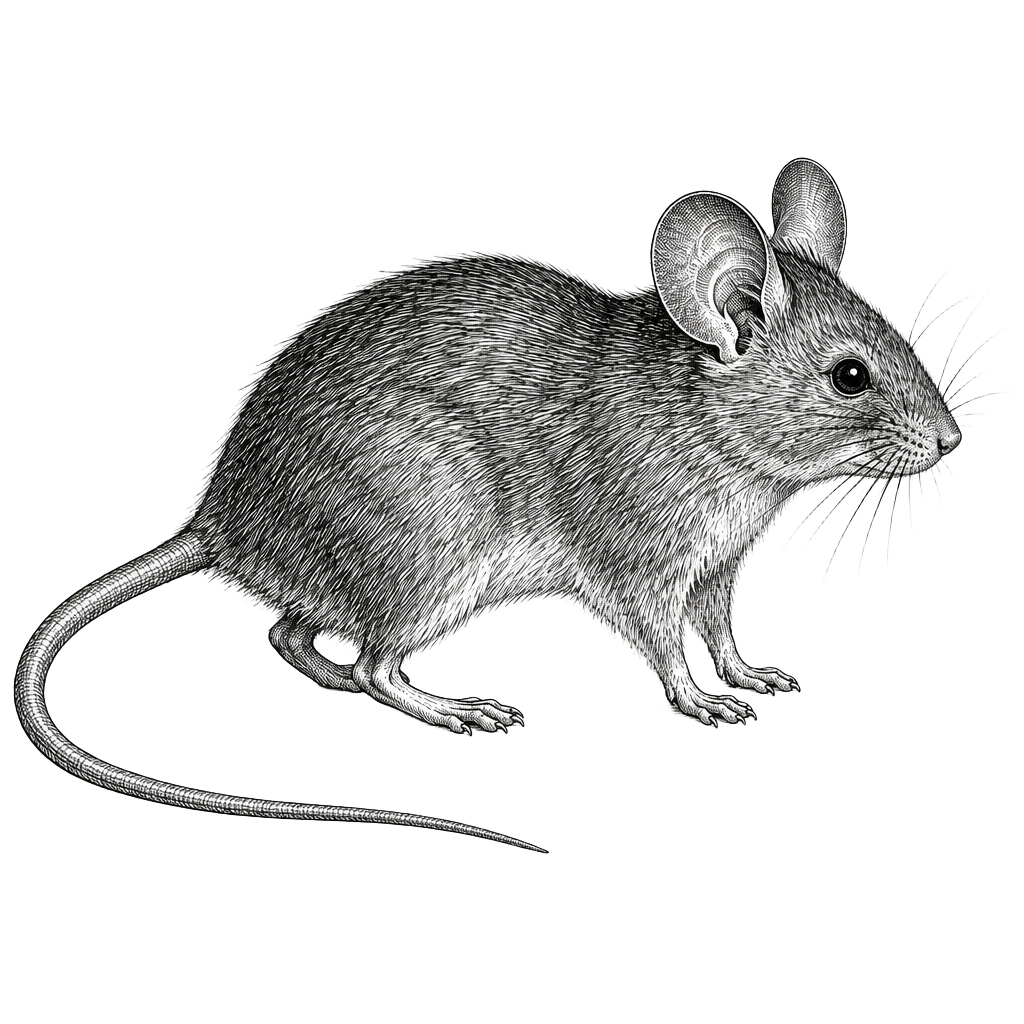
Most people notice rats by sound first. Go into the loft with a good torch during the day and look for the following:
- Scratching, gnawing or running noises, usually after dark and early in the morning.
- Droppings: dark brown, spindle-shaped and roughly 1–2 cm long, often in clusters along joists or near the hatch.
- Gnaw marks on timber, cables, pipe lagging or stored boxes. Fresh gnawing looks pale and sharp-edged.
- Disturbed or flattened insulation, with tunnels or nesting material such as shredded paper or fabric.
- Dark greasy smear marks along beams and around holes they use regularly.
- A strong, stale ammonia smell in an enclosed space.
§ 02
Rats or mice?
Both can live in lofts. Droppings are the easiest way to tell: mouse droppings are about the size of a grain of rice (3–6 mm), while rat droppings are noticeably larger. Rats are also heavier and louder, and the noise often sounds like something being dragged.
If you are unsure, our guide to telling mice and rats apart covers the differences in more detail.
§ 03
How rats get into a loft
Rats are good climbers and can squeeze through a gap about the width of a thumb. Common routes include damaged drains and soil stacks, cavity walls, gaps around pipes and cables, missing air brick covers, overhanging branches and gaps under roof tiles or at the eaves.
Finding the route matters as much as the treatment. If the entry point stays open, new rats will move in once the current ones have gone.
§ 04
Why it shouldn't be left
Rats gnaw constantly to keep their teeth worn down. In a loft that means electrical cables, water pipes and insulation, which can lead to fires, leaks and costly repairs. Their urine and droppings can also carry diseases such as leptospirosis and salmonella.
A female rat can have several litters a year, so a small problem can grow quickly over a few weeks.
§ 05
What you can do now
- Don't store food, bird seed or pet food in the loft or garage.
- Keep bins closed and tidy up fallen bird food in the garden.
- Avoid touching droppings with bare hands. Wear gloves and wash hands afterwards.
- Don't block holes until you know whether rats are still inside, or they may die in the walls or chew a new way out.
- Get a professional survey if you see more than one sign, or if the noises carry on for more than a few nights.